Isometric Exercise and Stress: What the Research Actually Says
Isometric exercise (holding a static position like a plank, wall sit, or dead hang for 30 to 60 seconds) is one of the most evidence-backed forms of exercise for reducing day-to-day stress. A 2024 umbrella review of meta-analyses found strong evidence that brief physical activity meaningfully reduces symptoms of anxiety and low mood, and unlike dynamic exercise, isometric holds combine muscular effort with forced presence: you can’t hold a 60-second plank while doom-scrolling. Here’s what the research actually says, and a four-minute reset routine worth trying tonight.
What the research shows
Exercise reduces depression and anxiety symptoms
A 2026 umbrella review in the British Journal of Sports Medicine synthesised 81 meta-analyses covering over 1,000 studies and 79,000 participants. The pooled effect of exercise interventions was a standardised mean difference of −0.61 for depression and −0.47 for anxiety, both substantial effects by the conventions of the field. Aerobic exercise produced the largest effects in the review, but resistance and mixed training also reduced symptoms [1].
The review doesn’t isolate isometric training but the evidence supports that exercise matters for mental health.
Fitness and emotional regulation
An experimental study in Acta Psychologica in 2026 recruited 40 young adults and split them by cardiorespiratory fitness (above vs. below average). Participants viewed unpleasant or neutral images in separate sessions while researchers measured anxiety and anger responses. The below-average fitness group showed much larger increases in anxiety after unpleasant images, and lower anger control, than the above-average group [2].
The study is small and observational in its comparison (fitness was measured, not randomly assigned). It doesn’t tell us that becoming fitter will make you calmer, only that fitter people in this sample reacted less sharply to stressors. It’s suggestive. It’s not proof.
The breath as anchor
During a hold — a 45-second plank, a 60-second wall sit — your core is engaged, your breath becomes effortful, and you can’t hold it without suffering. So you breathe. Slow, deep breathing through the nose engages the vagus nerve and shifts the autonomic balance toward parasympathetic activity [3].
The same mechanism is why breath-focused practices (box breathing, slow exhale) calm the nervous system. Isometric holds force the breath pattern on you whether you consciously intend it or not.
Why holds might be useful when other tools aren’t
Unlike seated meditation on a bad day. When your thoughts are spinning, being told to “observe them” can feel like drowning. A wall sit forces a different kind of attention — you can’t ignore your quads complaining after 45 seconds. The physical sensation becomes the anchor.
Unlike high-intensity cardio on a bad day. Sprinting works for some people. For others, it mimics the physiological profile of panic: racing heart, laboured breathing, cortisol rising. Isometric holds build tension and then stop. The rest that follows feels like an exhale.
Unlike willpower. You can’t talk yourself out of a stress response. You can sometimes work your way out through the body. Holding still in a demanding position, breathing deliberately, and releasing it… that sequence gives you something to do when “just calm down” fails.
A four-minute reset
Three holds. Four minutes of real time. No equipment.
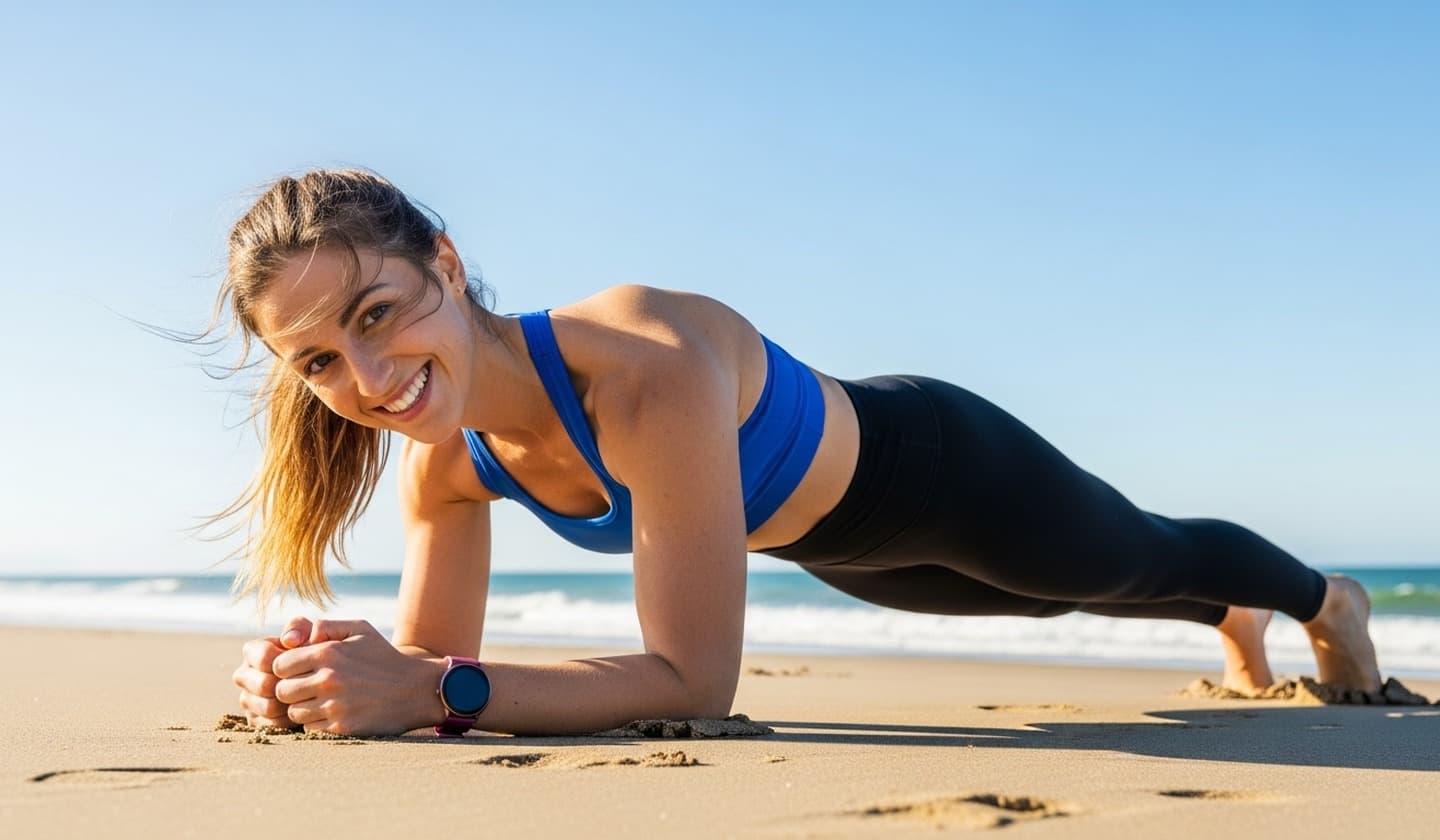
- Plank — 45 seconds. Forearms on the floor, body straight. Think ribs-down, glutes-light. Breathe into your belly. Don’t hold your breath.
- Wall sit — 45 seconds. Back flat against a wall, thighs parallel to the floor, shoulders relaxed. Let your arms hang. Breathe evenly.
- Dead hang — 30 seconds. From a bar, a doorframe pull-up bar, or wherever you can hang. Shoulders active. Knees slightly bent. Breathe into the stretch along your spine.
Rest 45 to 60 seconds between. Total elapsed time, including rest, is about four minutes.
Try it in the evening, after work, before dinner as a deliberate transition from “work brain” to “home brain.” Notice how your body feels before and after. Notice how you sleep. If you want to keep it up, you can track all three holds with Just Hold and turn the routine into a friendly competition.
What this is, and what it isn’t
If you are dealing with clinical anxiety, depression, or burnout, isometric exercise is not a substitute for professional care. A four-minute hold routine is a small lever, but one that is always within reach.
If you’re dealing with the accumulated tension of a normal, demanding life then the benefits of a short, daily investment in deliberate physical tension might surprise you.
Start tonight with just four minutes. Just Hold.
Educational content only, not medical advice. If you’re experiencing persistent symptoms of anxiety or depression, please consult a qualified professional. In the UK, Mind (mind.org.uk) and Samaritans (116 123) offer free support. In the US, call or text 988.
References
- [1] Munro NR, Teague S, Somoray K, et al. Effect of exercise on depression and anxiety symptoms: systematic umbrella review with meta-meta-analysis. British Journal of Sports Medicine. Published online 10 February 2026. doi:10.1136/bjsports-2025-110301.
- [2] Costa TG, do Amaral LC, Morais NS, et al. Cardiorespiratory fitness is associated with lower anger and anxiety and higher emotional resilience. Acta Psychologica. 2026.
- [3] Gerritsen RJS, Band GPH. Breath of life: the respiratory vagal stimulation model of contemplative activity. Frontiers in Human Neuroscience. 2018;12:397.