
Are Isometric Exercises Good For You? Six Reasons Holds Are Back in 2026
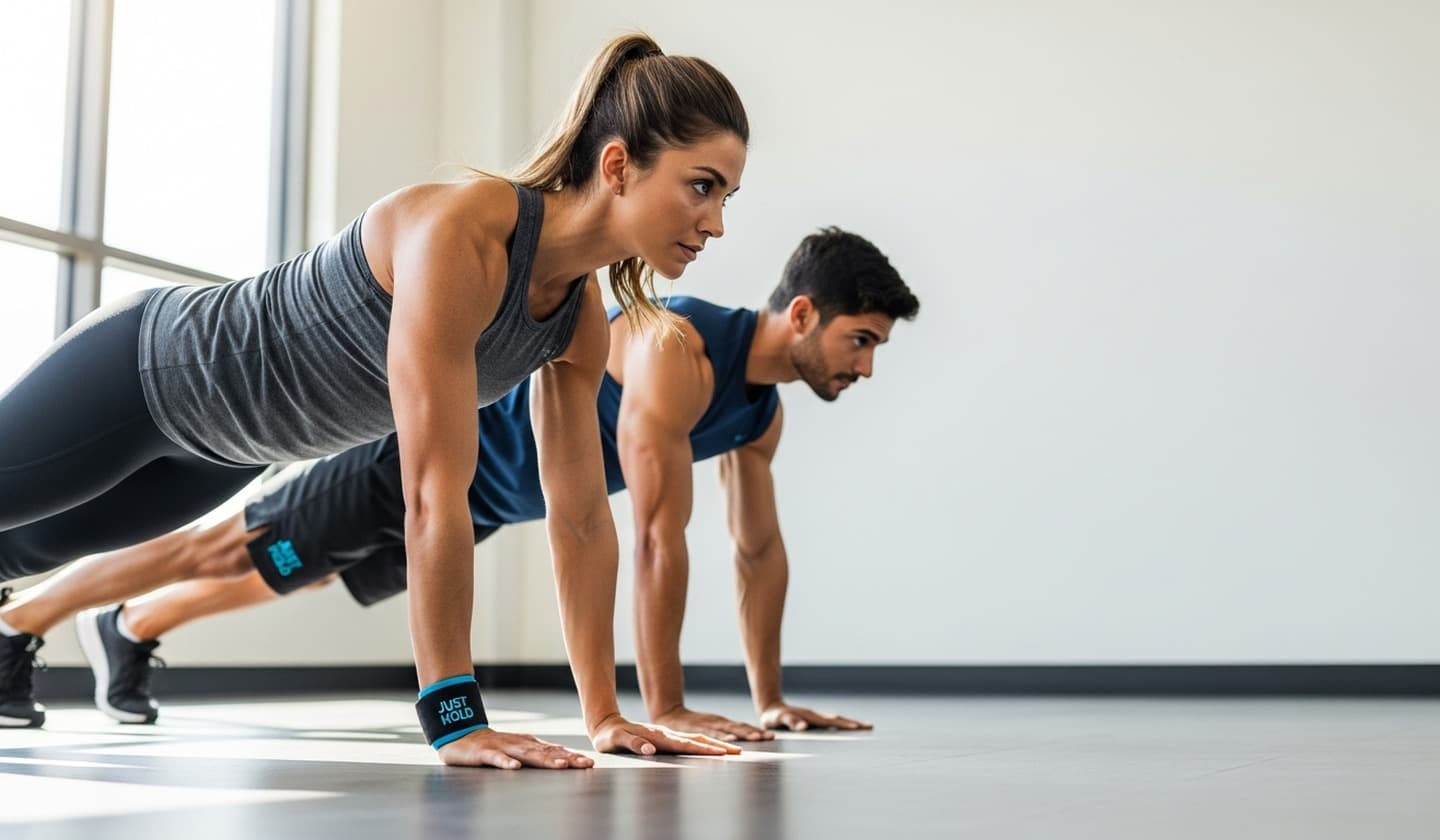
Isometric exercises (holds like a plank, wall squat or dead hang, where you create force without moving the joint) are good for more than one thing. The strongest evidence is for resting blood pressure, but they also let you load a sore joint carefully, need no kit, take minutes, and are easy to progress. Six reasons they belong in your week, plus a 15-minute template.
Six reasons isometrics earn space in your week
1. The blood-pressure evidence is real
In a 2023 meta-analysis of 270 randomised trials, isometric training was associated with the largest average reduction in resting blood pressure of the five exercise modes compared, 8.24 mmHg systolic and 4.00 mmHg diastolic, with the wall squat the top-ranked hold for systolic [1]. The protocol most of those trials used is four 2-minute holds, three times a week, for 8 to 12 weeks. The full picture (what the newer reviews add, what happens to blood pressure during a hold, and who should check with a doctor first) is in our guide to isometric exercise and blood pressure.
2. They let you load tissue at specific joint angles
Strength is joint-angle specific. If your shoulder hurts at the top of an overhead press, holding a light load in that position, and slowly graduating the load, is a rehabilitation tactic clinicians have used for decades.
Physiotherapy work by Cook and Purdam on tendon loading protocols formalised this: isometric holds can be useful entry-level loading for irritated tendons, because they provide tension without the repetitive stretch-shortening cycles that can aggravate reactive tendinopathy [2]. Later work from Rio and colleagues extended the framework for patellar tendon pain [3].
That framing matters because it reframes isometrics from “for people who can’t do real exercise” to “a targeted loading strategy.”
3. They’re kind to joints
Because the joint doesn’t move through a range, there’s no repeated shear or impact across articular surfaces during a hold. That makes isometrics accessible when joint pain makes running or jumping unpleasant, and useful as a way to train around (not ignore) a cranky knee or shoulder. They don’t replace range-of-motion work, they supplement it.
4. They build mental tolerance for discomfort
Anyone who has held a wall squat for 90 seconds knows this one from experience. You can’t muscle through a long isometric by pure force; you have to stay breathing, stay calm, and wait out the burn. That’s a trainable skill and people who practice sustained, voluntary discomfort in training often report being calmer under unrelated stressors. The empirical support here is mostly indirect (exercise and stress resilience, not isometrics specifically), so call this a reasonable inference rather than a proven effect.
5. They’re time-efficient
You don’t need equipment, a gym, or 30 minutes. Sixty seconds of a wall squat, thirty seconds of a plank, and a twenty-second hang is a meaningful total stimulus and you can scatter them through the day rather than block a workout. The Just Hold app is built for exactly this pattern.
6. They’re easy to progress
Holds have obvious progression levers: time, depth, limb position, and added load. You always know whether today was harder than last week.
How to start: three beginner holds
Plank. Forearms on the floor, elbows under shoulders. Straight line from heels to head. Start with 20–30 seconds. Progress by adding 5 seconds per session until you reach 60.
Wall squat. Back flat against a wall, feet a comfortable distance forward, knees at roughly 90 degrees. Start with 20–30 seconds. Build to two minutes over several weeks.
Dead hang. Grab a bar with arms straight, feet clear of the floor. Start with 10–20 seconds. Build to 45 seconds unbroken.
A weekly template
Three sessions a week is enough to see the effects accumulate. A minimal session might look like:
- Plank: 3 × 30 seconds
- Wall squat: 3 × 45 seconds
- Dead hang: 3 × 20 seconds
- 45 to 60 seconds rest between sets
Total time, including rest, is under 15 minutes. That’s the whole workout.
This week’s mini-challenge
Pick one hold. Pick a realistic starting time. Do three sets, rest 60 seconds between, three days this week. Log it.
- Plank: 30 seconds.
- Wall squat: 45 seconds.
- Dead hang: 20 seconds.
Track it in Just Hold and invite your friends, habits stick best when they’re shared. See if you can add five seconds to the weakest hold by next week.
Educational content only, not medical advice. If you have cardiovascular conditions or are new to exercise, speak with your GP before starting an isometric training protocol.
References
- [1] Edwards JJ, Deenmamode AHP, Griffiths M, et al. Exercise training and resting blood pressure: a large-scale pairwise and network meta-analysis of randomised controlled trials. British Journal of Sports Medicine. 2023;57(20):1317–1326.
- [2] Cook JL, Purdam CR. Is tendon pathology a continuum? A pathology model to explain the clinical presentation of load-induced tendinopathy. British Journal of Sports Medicine. 2009;43(6):409–416.
- [3] Rio E, Kidgell D, Purdam C, et al. Isometric exercise induces analgesia and reduces inhibition in patellar tendinopathy. British Journal of Sports Medicine. 2015;49(19):1277–1283.