
How to Choose a Pull-Up Bar for Home (for Dead Hangs and Pull-Ups)
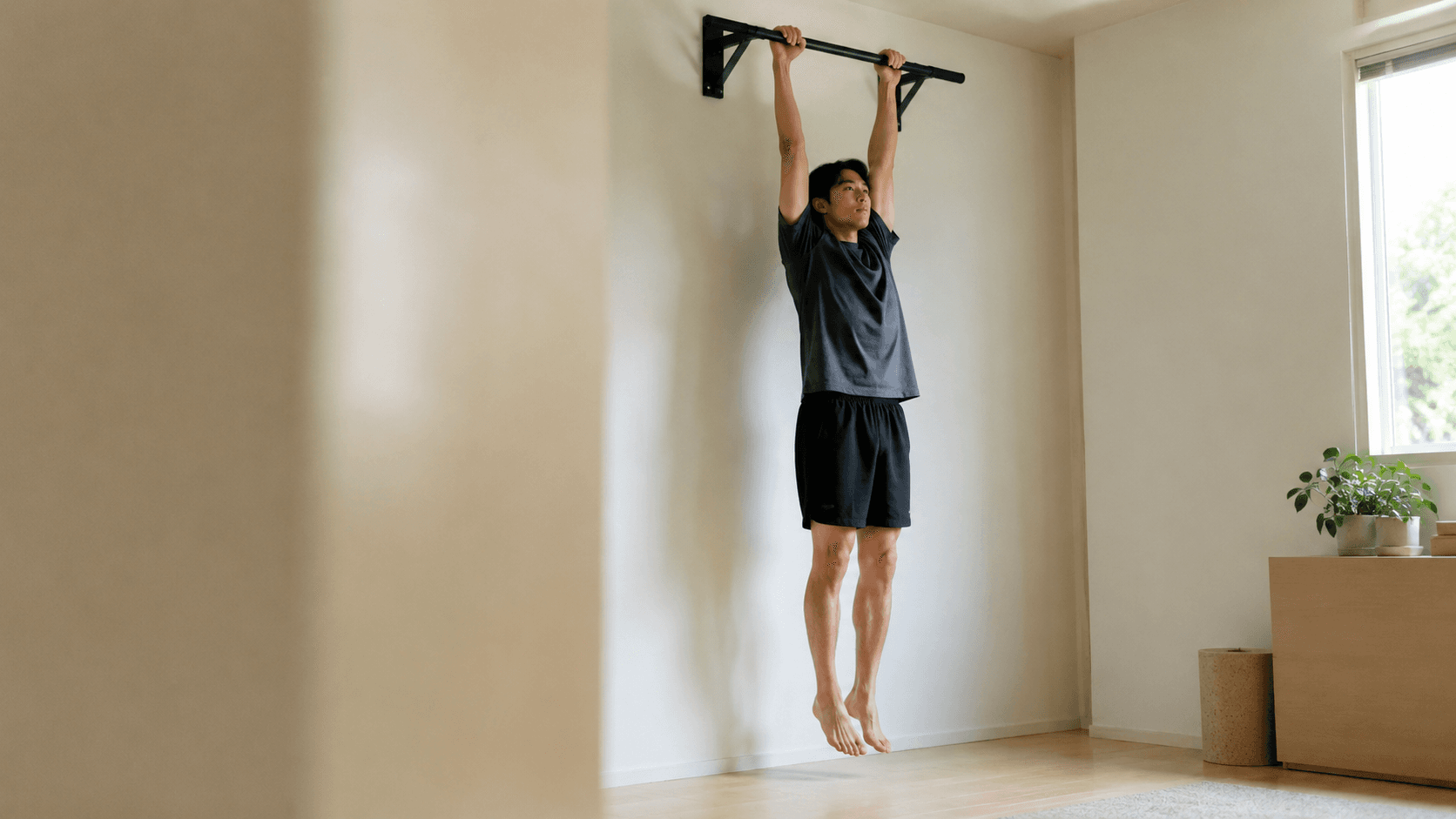
The best pull-up bar for most homes is either a doorway bar (no tools, removable, ideal for renters) or a wall-mounted bar (more secure, higher weight limit, but needs drilling). Which one suits you depends on three things: your doorway and walls, whether you can drill into studs, and your bodyweight. This guide walks through every type, the pros and cons, the weight limits and safety points that actually matter, and where to install one, whether you mostly want to dead hang or to do full pull-ups.
It is a good moment to put a bar up. Dead hangs (simply hanging from a bar with straight arms) have become a genuinely popular fitness trend, partly because grip strength has earned attention as a marker of healthy ageing: the large PURE study of around 140,000 adults found grip strength is associated with cardiovascular and all-cause mortality [1], and longevity-focused doctors such as Peter Attia have publicly highlighted grip as one of the markers worth tracking as you age [3]. The appeal of hanging is that the barrier to entry is almost nothing. You need a bar, and that is it [2].
The best bar for dead hangs specifically
If dead hangs are the main thing you want to do, you have the easiest shopping job on this page. A dead hang is a static load of roughly your bodyweight, applied smoothly, so almost any properly fitted bar will take it. For most people the answer is a doorway leverage bar: no drilling, a few minutes to fit, and it comes down again when you move. The things to check are that your door frame has solid trim deep enough for the pads to sit on, that the rated limit comfortably clears your bodyweight, and that you can hang with your feet off the floor without folding your knees up to your chest (bend them back behind you instead if the doorway is low).
If you own the walls and want a bar that will still be there in ten years, a wall-mounted bar into studs or masonry is the better buy, and it leaves room to add pull-ups, bands or rings later. If you cannot fix anything to the structure at all, a climbing hangboard mounted on a board above a door frame, or a free-standing tower, are the fallbacks. The rest of this guide goes through each type in detail, then the weight limits and safety points that actually matter.
First, what do you actually want to do on it?
The right bar depends on the load you will put through it, and dead hangs and pull-ups are not the same load.
- Dead hangs are a static hold. You hang with straight arms and relaxed shoulders. The load is roughly your bodyweight, applied smoothly, so even a basic, well-fitted doorway bar is usually fine.
- Pull-ups are dynamic. Pulling up and lowering, and especially any kipping or swinging, can spike the force on the bar well above your bodyweight. A common rule of thumb is to plan for 1.25 to 1.5 times your bodyweight on dynamic reps, which pushes you toward a sturdier, fixed bar.
If hanging is your main goal, you have more options and can spend less. If you want a long-term pull-up setup, lean toward a fixed wall or ceiling bar from the start.
The main types of home pull-up bar
Doorway bar (over-the-door leverage type)
The most common home option. A padded bracket hooks over the top of the door frame and the leverage of your weight holds it in place, with wide pads resting on the trim above the door. No drilling, quick to fit and remove, and inexpensive. The trade-offs: it needs a suitable, solid door frame with enough trim depth, the weight limit is usually lower (often around 300 lb or 135 kg, but check the model), it can mark or stress the trim, and it is not made for heavy kipping. Good for dead hangs and controlled pull-ups, and the natural choice for renters.
Doorway bar (telescopic tension or screw-in)
A bar that fits inside the door frame, either by spring tension or by screwing into mounted brackets. Tension (pressure-fit) bars are cheap but rely on friction, so they are best kept to gentle hanging, not pull-ups, because a poorly fitted one can slip. Screw-in bracket versions are much more secure but leave small holes in the frame. Worth knowing the difference: a tension shower-rail-style bar and a bracket-mounted bar look similar and are not equally safe for pulling.
Climbing hangboard (the low-profile alternative)
A hangboard (also called a fingerboard) is a climbing training tool: a solid slab of wood or resin with jugs, edges, and pockets to grip, screwed flat to the wall. Mounted above a door frame it sits nearly flush, so nothing juts out into the room to catch your head or shirt, and a well-made wooden board looks more like a design choice than a piece of gym kit. Two caveats. First, it must be screwed into solid wall or studs, exactly like a wall-mounted bar, never into plasterboard alone, and the strip above a door frame often lines up nicely with the header studs. Second, the holds come in degrees of difficulty: the deep jugs (usually the topmost, rounded holds) are comfortable to hang from, while the shallow edges and small pockets load your fingers hard and exist for climbers building finger strength. Pick a board with generous jugs and start there, treating the smaller holds as something to grow into rather than the starting point, unless testing your finger strength is exactly the point.
Wall-mounted bar
A steel bar bolted into wall studs or solid masonry. Sturdy, with a higher weight limit (often 400 lb or more, model depending), good standoff from the wall for clearance, and strong enough for bands and gymnastic rings. The trade-offs: it is permanent, you have to drill, and you must fix it into studs or solid wall, not plasterboard alone. The best all-round choice if you can drill and you want to do real pull-ups.
Ceiling or joist-mounted bar
Bolted up into ceiling joists. It gives the most clearance and the most rock-solid feel, which suits pull-ups and hanging accessories. The catch is installation: you must locate and fix into joists, and it is the most involved fit of the lot. Great if done properly, not a casual job.
Free-standing power tower
A weighted frame with a pull-up bar on top, usually with dip and leg-raise stations too. No drilling, movable, and a good fit if you cannot or will not fix anything to the structure. The trade-offs: it takes up floor space, and lighter models can rock or tip under aggressive reps, so check the footprint and the build quality.
Outdoor bar
A garden frame or a bar fixed to an exterior wall. You get space, headroom and fresh air. The considerations are weatherproofing (galvanised or coated steel) and fixing into something genuinely solid, such as masonry or a concreted post.
Weight limits and safety: read this before you hang
Hanging your full bodyweight from something you have just fitted deserves a moment of care. A few points that matter more than the marketing number on the box:
- The bar’s rating is not the only limit. With a doorway bar, the door frame or trim can fail before the bar does. The bar might be rated to 300 lb, but your trim might not be. Check the structure, not just the bar.
- Leave a margin. Make sure the rating comfortably exceeds your bodyweight, and remember dynamic pull-ups can apply 1.25 to 1.5 times your weight.
- Material matters. Steel bars are stronger and more durable than aluminium, which is lighter but usually rated lower.
- Test it low and gradually. Before you trust a new bar with your full weight, load it gently first, with feet still able to take some weight, and check nothing shifts or creaks.
- Re-check fixings over time. Bolts loosen and brackets settle. A quick periodic check is worth it.
- Mind your head and the floor. Make sure you can hang with your arms straight and your feet clear, even if that means bending your knees.
Where to install it
For a doorway bar, pick a solid frame with deep enough trim for the pads to rest on, and a doorway you are happy to keep clear. You want enough height to hang with straight arms and your feet off the floor, knees bent if needed.
For a wall or ceiling bar, find the studs or joists with a stud finder and fix into those, never into plasterboard alone. Allow clearance from the wall so your hands and knuckles are not cramped, headroom above so you are not hitting the ceiling, and space below to hang fully. For a free-standing tower, you just need a level patch of floor and a bit of room around it.
Renting? A doorway leverage bar or a free-standing tower gives you a proper hang with nothing drilled and nothing to make good when you leave.
Which should you buy? A quick decision guide
- Renting, or you just want to dead hang with no fuss: a doorway leverage bar.
- You want something discreet that stays out of the way and looks good doing it: a climbing hangboard above a door frame, screwed into solid wall or studs, using its deepest holds.
- You can drill and you want to do real pull-ups for the long term: a wall-mounted bar.
- You want maximum clearance and the most solid feel: a ceiling or joist-mounted bar.
- You cannot fix anything to the structure but have floor space: a free-standing power tower.
- You have a garden and want to train outside: an outdoor frame or exterior wall bar.
Once the bar is up, our guide to why dead hangs deserve a minute of your day covers how to start and progress.
Frequently asked questions
Are doorway pull-up bars safe for dead hangs?
Generally yes, provided the bar is rated above your bodyweight and your door frame and trim are solid. A dead hang is a static load applied smoothly, which is gentler on the fitting than dynamic pull-ups. Fit it properly, test it gently first, and check the frame, not just the bar.
Do doorway pull-up bars damage door frames?
They can mark or stress the trim over time, since your weight is levered against it. Choosing a bar with wide, padded contact points and making sure your trim is solid reduces the risk. If marking the frame is a concern, a wall-mounted or free-standing option avoids it.
What weight can a pull-up bar hold?
It varies by type and model. Doorway bars are often rated around 300 lb (135 kg), while wall and ceiling bars are commonly 400 lb or more. Always check your specific model, leave a margin above your bodyweight, and remember the door frame or wall can be the weaker link.
Can I install a pull-up bar without drilling?
Yes. A doorway leverage bar needs no tools, and a free-standing power tower needs no fixing to the structure at all. Both are good options for renters or anyone who would rather not drill.
Can I use a climbing hangboard instead of a pull-up bar?
Yes. For dead hangs, and even controlled pull-ups, a hangboard mounted above a door frame works well and takes up far less room than a bar, as long as it is screwed into solid wall or studs. Use the deepest holds (the jugs): the small edges and pockets are much harder on your fingers and are meant for climbers who have built up to them gradually.
How high should a pull-up bar be?
High enough that you can hang with your arms fully straight and your feet clear of the floor. You do not need to stand directly under it: bending your knees to clear the ground is completely normal and does not reduce the benefit.
How high should a dead hang bar be?
High enough that you can hang with straight arms and your feet just clear of the floor, which for most adults means the bar somewhere around 15 to 30 cm above your standing reach. A doorway bar is fixed by the height of your door frame, usually about 2 metres, so taller people bend their knees behind them. If you are fitting a wall or ceiling bar, stand with your arms up, add a hand’s width, and mount it there.
Can I dead hang from a doorway bar every day?
From the bar’s point of view, yes, as long as it is fitted properly and you re-check the fixings now and then. From your point of view, short daily hangs are how most people build up, starting around 10 to 20 seconds and adding time as your grip allows. If your hands or shoulders complain, take a day off; the bar is not going anywhere.
The bottom line
For most homes it comes down to a simple split: a doorway bar if you want a quick, removable way to start hanging, or a wall-mounted bar if you can drill and you want a long-term setup for pull-ups. Match the bar to the load (static hangs are forgiving, dynamic pull-ups are not), check the structure as carefully as the bar, and leave yourself a safety margin.
With the bar up, the hard part is using it regularly. That is where Just Hold helps: it times your dead hangs, tracks your best, and puts you on a friendly leaderboard with your family or friends, so a bar in a doorway turns into a habit rather than a good intention. It is free to start, no card needed, and you can watch your hang time climb week by week.
Educational content only, not medical or professional installation advice. Follow the manufacturer’s instructions and weight limits, make sure your door frame, wall, or ceiling can take the load, and consult a qualified tradesperson if you are unsure about a fitting. If you have shoulder, back, or other health concerns, speak with a clinician before starting hanging or pull-up training.
References
- [1] Leong DP, Teo KK, Rangarajan S, et al. Prognostic value of grip strength: findings from the Prospective Urban Rural Epidemiology (PURE) study. The Lancet. 2015;386(9990):266–273.
- [2] TODAY (NBC). What is a dead hang? How the simple exercise improves grip strength and posture.
- [3] Attia P. AMA #71: Building strength and muscle mass, grip strength as a predictor of all-cause mortality. The Peter Attia Drive podcast.